
Lipid-Dense Emollients vs. Standard Lotions: Which Barrier Support is Right?
When managing skin prone to atopic dermatitis, navigating the “moisturizer” aisle can be overwhelming. Not all moisturizers are created equal. In cases of chronic dryness and a compromised skin barrier, understanding the distinction between a lipid-dense emollient and a standard cosmetic lotion is crucial for effective comfort.
The Role of Formulation Density
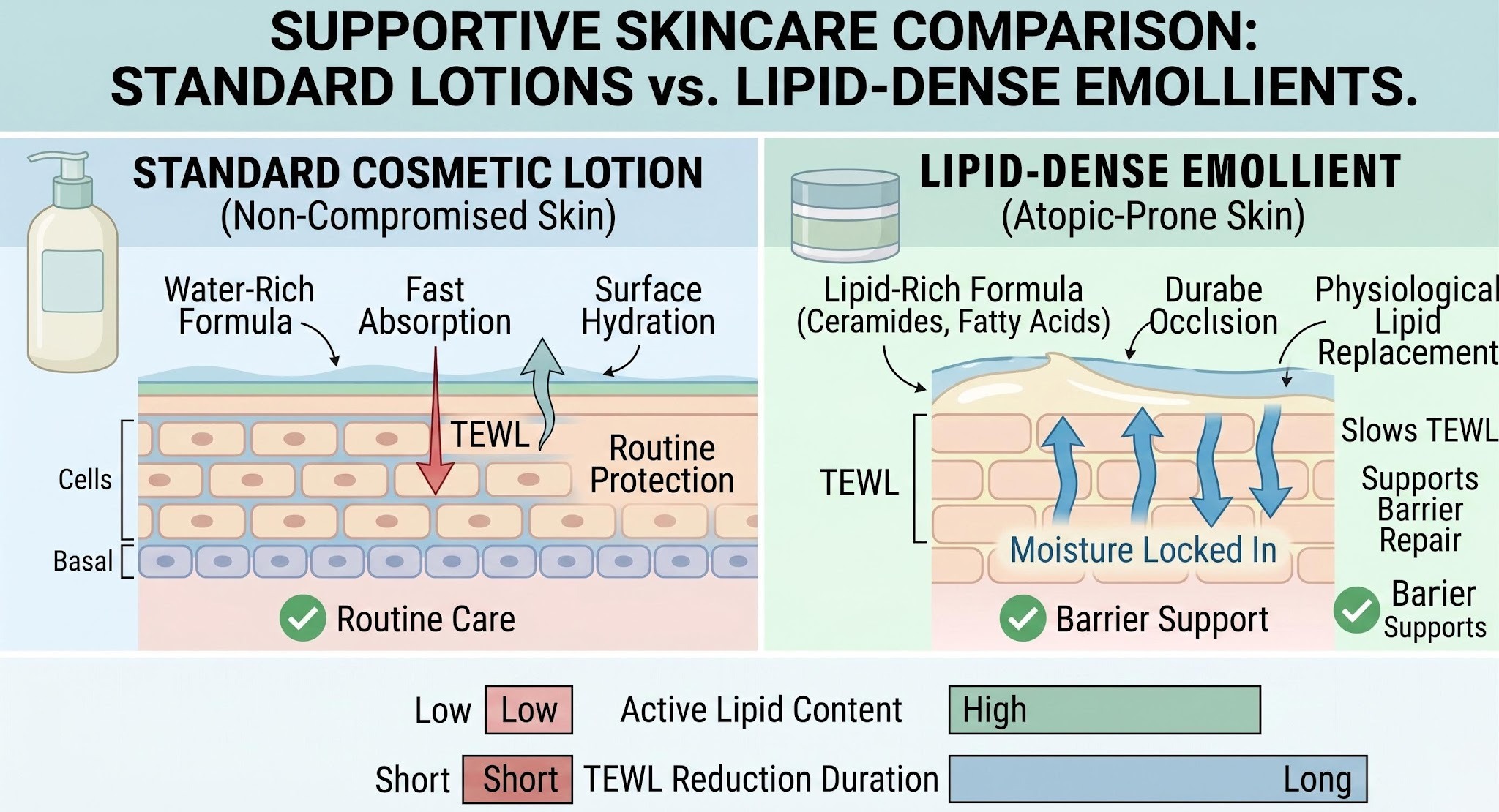
Standard lotions often have high water content and lower lipid concentration. While they feel light and absorb quickly, they often evaporate too rapidly to provide lasting relief to extremely dry, atopic-prone skin. Emollients, conversely, are typically lipid-dense (often formulated as ointments or thick creams)
Emollient Advantages: “Seal and Refill”
For atopic skin, emollients offer two critical benefits that lotions often lack:
- Sustained Occlusion: They form a long-lasting protective film that slows Transepidermal Water Loss (TEWL).
- Physiological Lipid Replacement: They are often enriched with the specific lipids (like ceramides, cholesterol, and fatty acids) that atopic skin naturally lacks, effectively helping to “refill” the structural deficit of the barrier.
When to Choose a Lotion?
Standard lotions are suitable for routine daily hydration on non-compromised skin or during very mild weather. However, when flares are managed or skin integrity is fragile, the lipid density and sustained barrier support of a true emollient are essential.
The Xtrimoist Approach
Xtrimoist AD Moisturising Lotion range focuses exclusively on lipid-dense emollient therapy. Our formulations are rich in physiological lipids and long-wearing occlusives, designed to serve as durable, adjunct skincare support to reduce the feeling of severe dryness and support barrier resilience.
Infographic Representation: Comparative Barrier Support
Dermatologist Alignment: Dermatologists frequently emphasize the distinction between standard cosmetic lotions and therapeutic emollients. The consensus is that lipid-dense emollients are indispensable for managing chronic xerosis and stabilizing a compromised barrier in patients with atopic dermatitis.
This article is for educational purposes only and is not a substitute for medical advice. Please consult a dermatologist or healthcare professional for personalised guidance.