

Skin Concern
Normal to Dry & Sensitive Skin
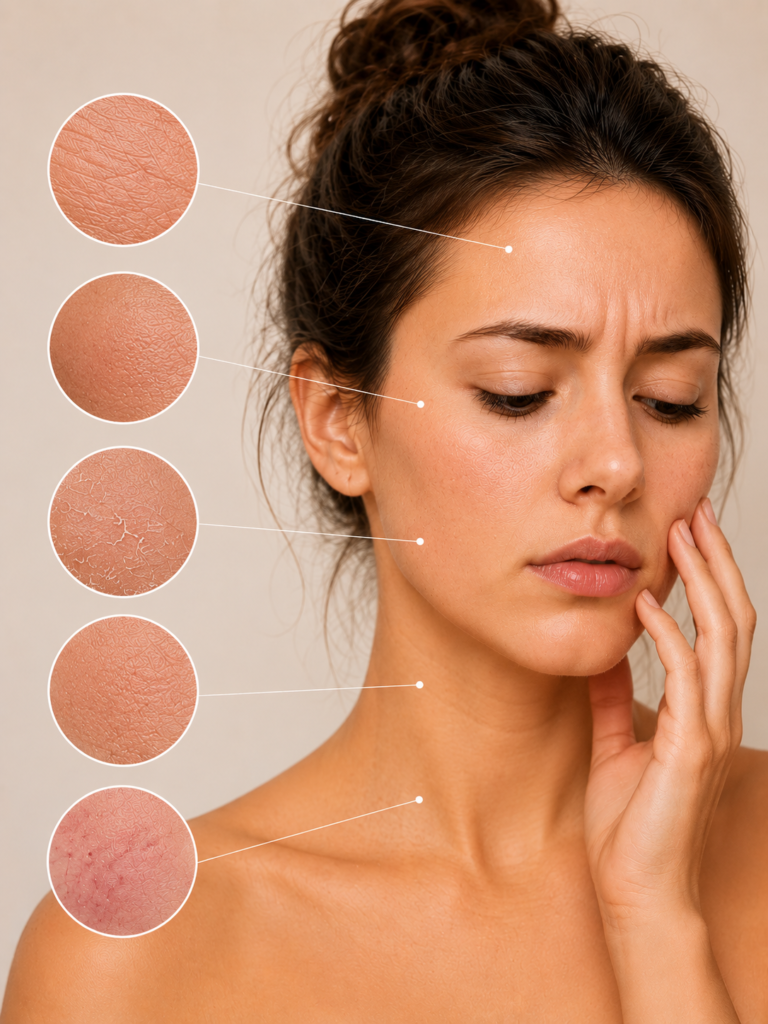
Symptoms
Common Cleansing Challenges for Normal, Dry & Sensitive Skin
- Post-Wash Tightness and “Squeaky” Skin: When harsh surfactants strip the skin’s natural sebum and lipids, the surface physically contracts as water rapidly evaporates, leaving an uncomfortable, stretched sensation immediately after towel-drying.
- Cleanser-Induced Redness: The mechanical friction of washing combined with irritating foaming agents frequently triggers a visible flush, leaving sensitive skin looking blotchy and feeling warm.
- Exacerbated Surface Flaking: Stripping cleansers disrupt the skin’s natural moisture balance, which can paradoxically cause the outer layers of dry skin to look more ashen and powderier after washing.
- Compromised Acid Mantle: Cleansers with a high (alkaline) pH temporarily destroy the skin’s protective acid mantle, leaving the barrier highly vulnerable to environmental stressors and moisture loss for hours after washing.
- The “Clean but Dry” Dilemma: The constant struggle of needing to remove heavy sunscreens, daily pollution, and makeup, but knowing that effective cleansing often leads to parched, rough-feeling skin.
Causes
- The Cause (Lipid Solubilization and Protein Denaturation): Harsh anionic surfactants (like Sodium Lauryl Sulfate) are indiscriminate; they cannot tell the difference between the "bad" oils (makeup, pollution, excess sebum) and the "good" oils (your skin's essential ceramides, cholesterol, and fatty acids). During washing, strong micelles solubilize and extract these vital intercellular lipids, washing them down the drain. Additionally, these harsh surfactants bind to the keratin proteins inside the skin cells, causing them to swell and denature. As the water rapidly evaporates post-wash, the lipid-depleted, denatured cells physically shrink and contract, creating the tight, "squeaky" sensation.
Reference: Cleansing without compromise: the impact of cleansers on the skin barrier and the technology of mild cleansing (Ananthapadmanabhan, K. P., et al., 2004, Dermatologic Therapy).
- The Cause (Surfactant Penetration and Neurogenic Inflammation): When the lipid barrier is temporarily breached by harsh foaming agents, the surfactant molecules penetrate deeper into the viable layers of the epidermis. This chemical intrusion, combined with the mechanical friction of rubbing the face or using a washcloth, triggers an immediate defensive response. The skin releases pro-inflammatory cytokines (such as IL-1$\alpha$) and neuropeptides. This localized inflammatory cascade causes the superficial blood vessels to rapidly dilate (vasodilation), presenting as a visible flush and a warm, stinging sensation.
Reference: Interactions between surfactants and the skin – Theory and practice (Seweryn, A., 2018, Advances in Colloid and Interface Science).
- The Cause (NMF Depletion and Enzymatic Failure): Cleansers don't just wash away oil; water and surfactants also wash away the water-soluble Natural Moisturizing Factor (NMF) from inside the skin cells. Without the NMF to bind water, the outermost layer of the skin becomes acutely dehydrated. Crucially, the natural enzymes responsible for shedding dead skin cells (desquamation) are entirely water-dependent. In this sudden drought, the enzymes stop working. The dead cells fail to detach properly and instead clump together, causing the skin to look immediately ashen and powdery once dry.
- The Cause (Alkaline pH Shift): Healthy skin operates at a slightly acidic pH, typically between 4.5 and 5.5. This "acid mantle" is critical for survival: it keeps the skin flora balanced and is the optimal environment for the enzymes that build barrier ceramides. Many traditional soaps and commercial cleansers are highly alkaline (pH 8 to 11). Washing with an alkaline cleanser drastically spikes the skin's pH. This sudden shift temporarily paralyzes lipid-building enzymes (like $\beta$-glucocerebrosidase) and creates a hospitable environment for pathogenic, irritating bacteria to thrive, leaving the barrier compromised for hours until the skin can naturally re-acidify.
- The Cause (The Physics of Emulsification vs. Barrier Integrity): This dilemma represents the fundamental challenge of cosmetic chemistry. To effectively remove tenacious, lipophilic (oil-loving) debris like waterproof sunscreen, silicone-based makeup, and oxidized sebum, a cleanser must contain emulsifiers capable of breaking down strong oils. The biological challenge is that the skin's protective barrier is also made of lipids (oils). Formulating a cleanser that is powerful enough to break down the exogenous (outside) debris while being "intelligent" or mild enough to leave the endogenous (inside) barrier lipids completely intact requires highly sophisticated, bio-compatible surfactant technology (such as amino acid-based cleansing).
Reference: Cleansing formulations that respect skin barrier integrity (Walters, R. M., et al., 2012, Dermatology Research and Practice).
Treatment
The Xtrimoist DS Daily Cleansing Protocol: A Multi-Pathway Approach
Overcoming the “clean but dry” dilemma requires a formulation that intelligently distinguishes between external impurities and internal barrier lipids. Here is how the Xtrimoist DS formula targets the core challenges of daily cleansing:
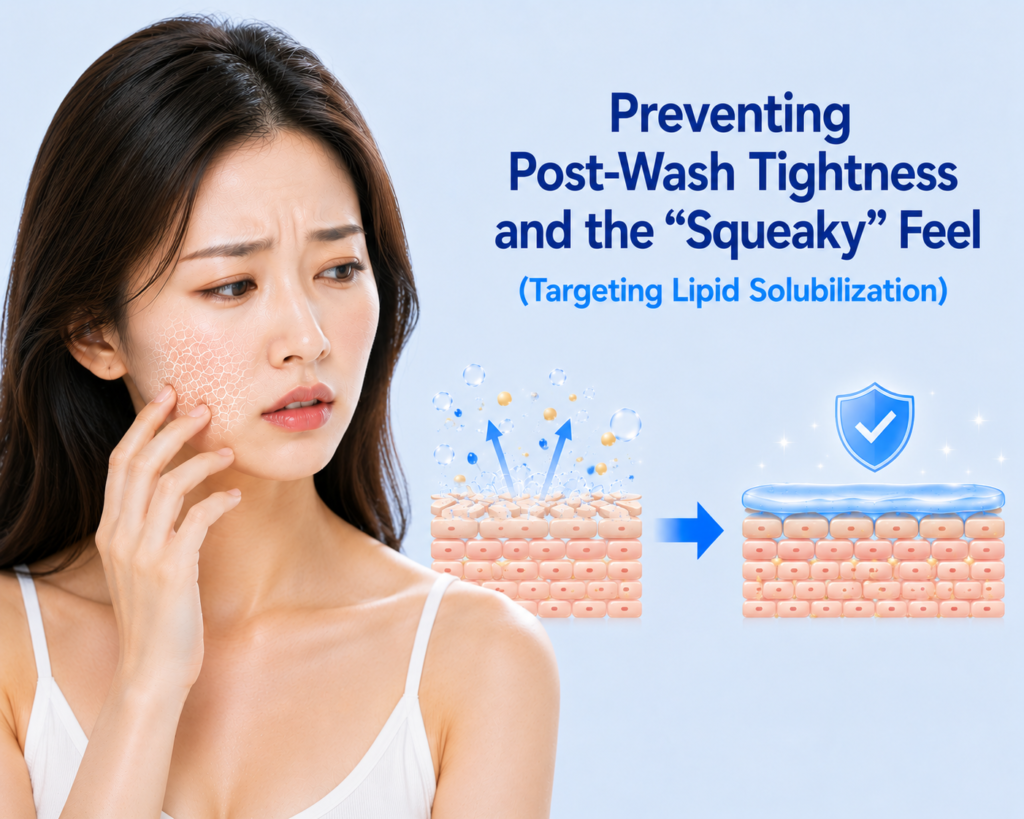
The Approach: The skin needs to be cleansed without having its essential intercellular lipids aggressively extracted or its proteins denatured by harsh sulfates.
- The Xtrimoist DS Solution: We utilize a Bio-Compatible Surfactant System. By formulating exclusively with ultra-mild, amino acid-based cleansers (like Sodium Cocoyl Apple Amino Acids and Sodium Lauroyl Sarcosinate), the wash creates a gentle micellar action. This lifts away makeup, oil, and pollution while leaving the skin’s natural lipids entirely intact, effectively preventing that uncomfortable, stretched sensation after towel-drying.
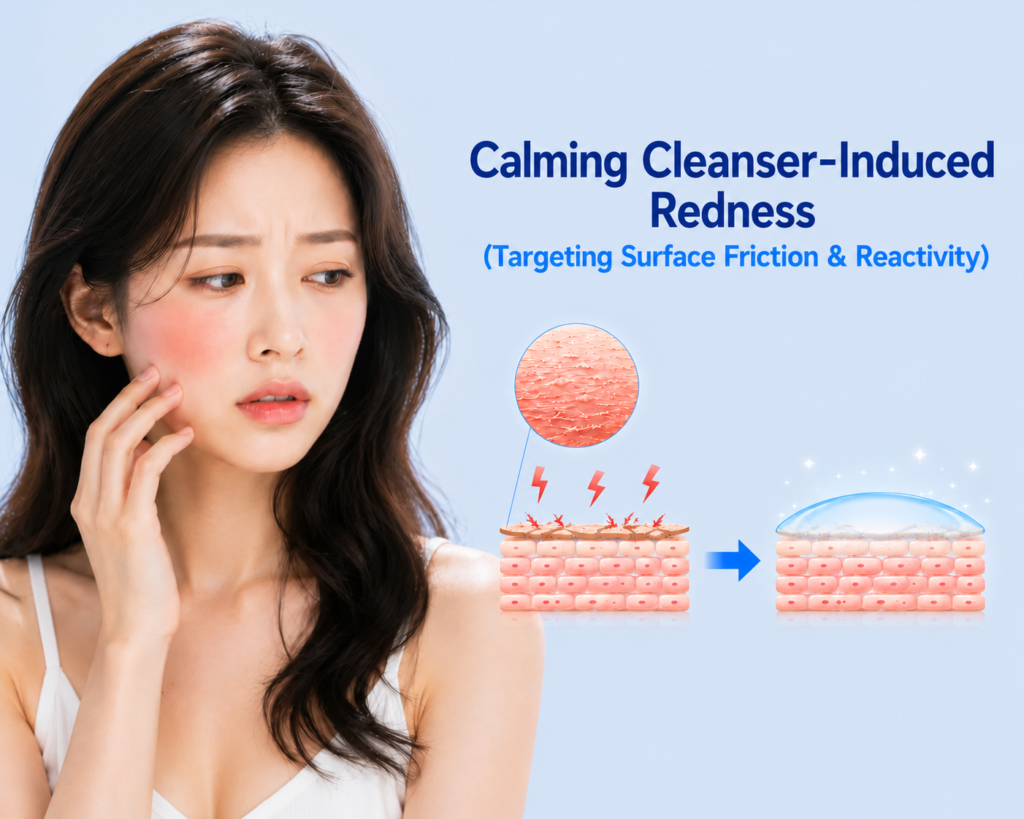
The Approach: Sensitive skin easily flushes from the mechanical friction of washing and the chemical intrusion of standard foaming agents. It requires an immediately soothing wash environment.
- The Xtrimoist DS Solution: The formula is enriched with Targeted Botanical Calming Agents. As the gentle lather cleanses, a curated blend of D-Panthenol, Allantoin, Aloe Vera, and Turmeric Extract actively comforts the skin’s surface. This proactive soothing buffers the skin against friction and significantly minimizes the appearance of post-cleansing redness.
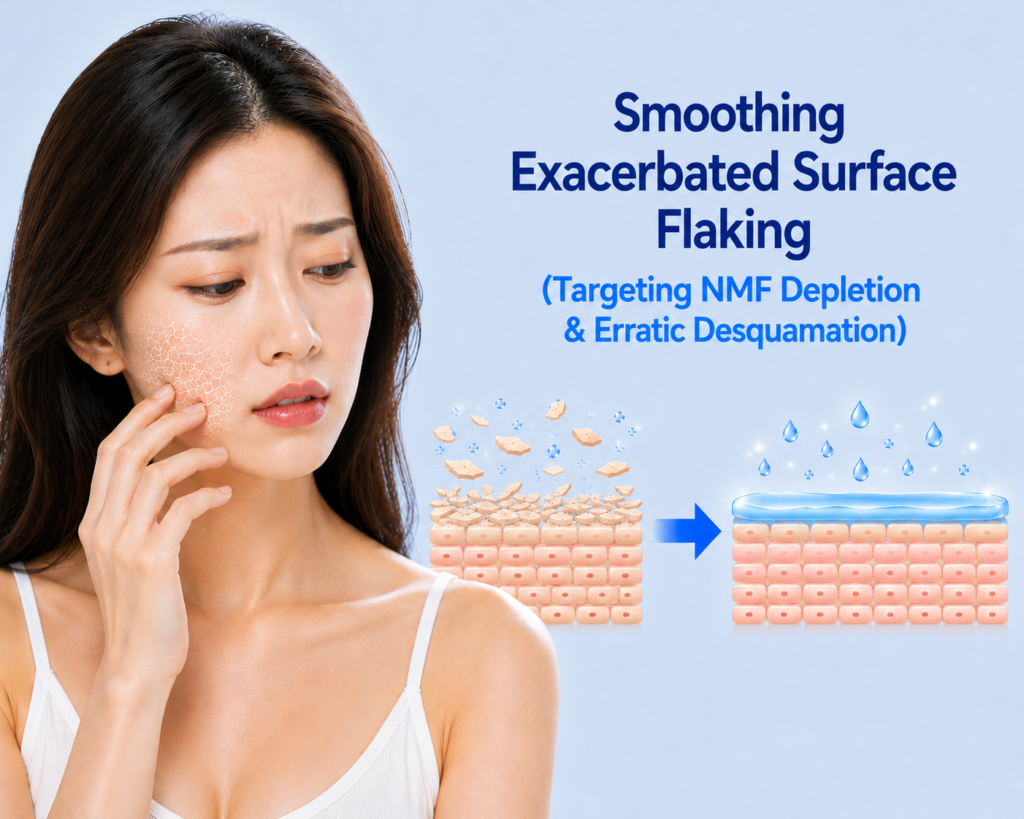
The Approach: Washing away the skin’s Natural Moisturizing Factor (NMF) stalls the natural shedding process, leading to a powdery, flaky appearance. The cleanser must replace water-binding elements and encourage smooth cellular turnover.
- The Xtrimoist DS Solution: We deploy an Advanced Moisture-Binding Network alongside our Clarifying & Refining Trio. Sodium PCA and an advanced sugar complex bind vital water to the skin during the wash. Simultaneously, a micro-dose of Salicylic Acid, Lactic Acid, and Gluconolactone provides imperceptible, non-abrasive exfoliation to wash away clinging dead cells, leaving the surface smooth rather than flaky.
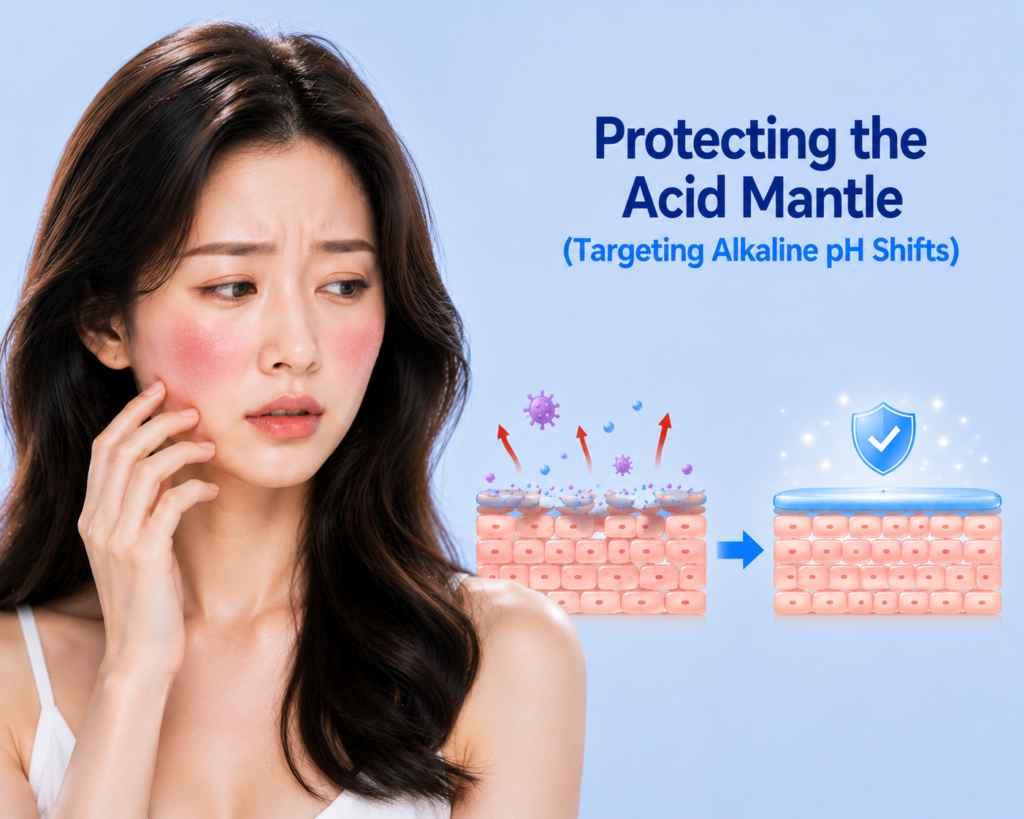
The Approach: Traditional highly alkaline cleansers temporarily paralyze the skin’s barrier-building enzymes and leave it vulnerable to bacteria. The skin’s natural acidic environment must be preserved.
- The Xtrimoist DS Solution: Xtrimoist DS is strictly formulated at a Skin-Respecting pH of 5.5. This harmonizes perfectly with the skin’s natural acid mantle, ensuring that the optimal environment for protective microflora and lipid-building enzymes is maintained uninterrupted.
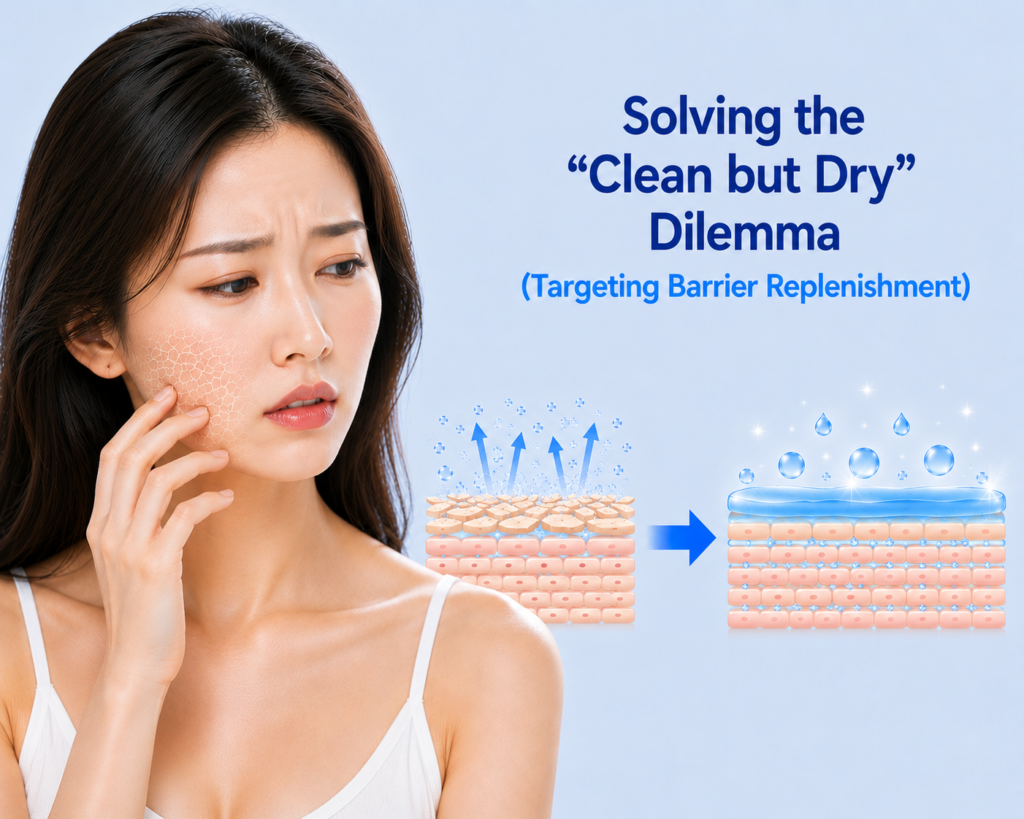
The Approach: To effectively remove stubborn daily debris without leaving the skin parched, the cleanser must actively give back to the barrier while it cleanses.
- The Xtrimoist DS Solution: We incorporate a unique Wash-Phase Barrier Support Matrix. By infusing the cleansing base with bio-mimetic Ceramides (NP, AP, EOP), Phytosphingosine, and Cholesterol, the formula actively supports the structural “mortar” of the skin while washing. This intelligent approach ensures the skin is left perfectly purified, yet exceptionally soft, smooth, and deeply comfortable.