

Skin Concern
Oily, Acne-Prone dry Skin
Symptoms
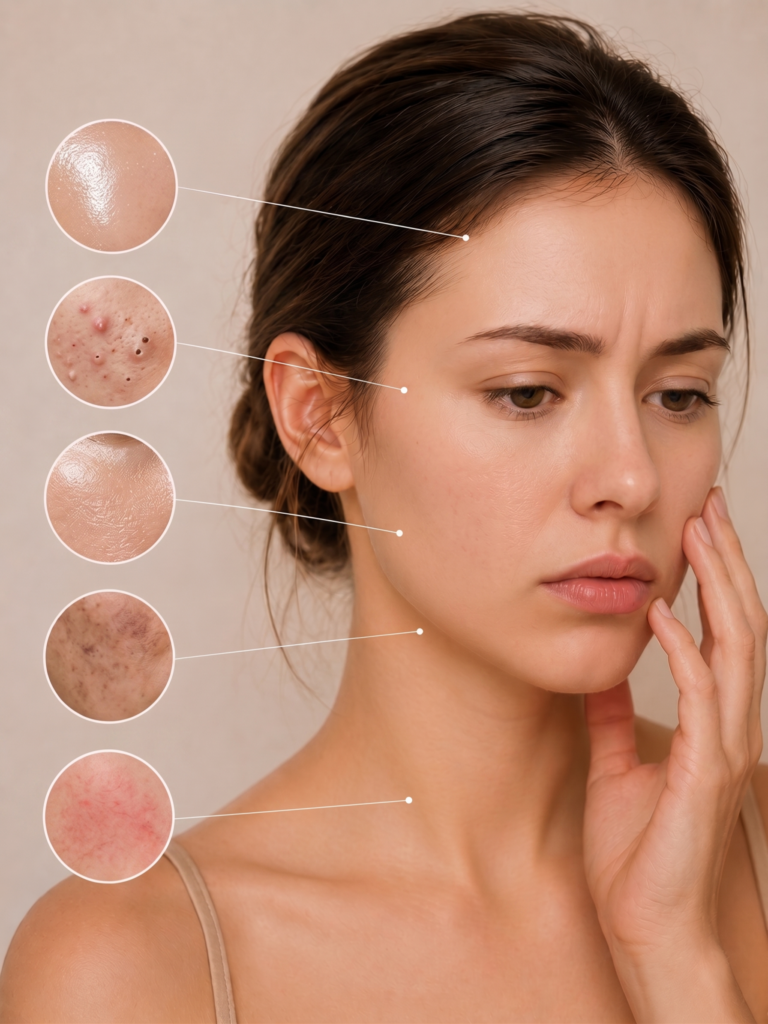
Common Characteristics of Oily, Blemish-Prone & Dehydrated Skin
- Overactive Sebum Production and Persistent Shine: The skin produces an excess of natural oils, leading to a chronically shiny appearance and a heavy, congested feeling throughout the day.
- Frequent Blemishes and Congested Pores: Excess oil mixes with dead skin cells on the surface, trapping debris inside the pores. This leads to the frequent appearance of blackheads, whiteheads, and visible blemishes.
- Surface Dehydration and “Tight” Oiliness: Often caused by harsh topical treatments or environmental stress, the skin’s moisture barrier is stripped. The skin feels paradoxically tight and dry underneath, while appearing excessively oily on the surface.
- Uneven Skin Tone and Textural Irregularities: Following a breakout, the skin is often left with visible post-inflammatory hyperpigmentation (dark spots) and rough, uneven textural patches.
- Visible Redness and Reactivity: The localized irritation associated with congested pores often triggers a visible flush, leaving the affected areas looking red, inflamed, and highly sensitive to touch.
Causes
- The Cause (Sebaceous Gland Hyperactivity): The production of sebum (oil) is primarily regulated by hormones, particularly androgens. In blemish-prone skin, the sebaceous glands are often hypersensitive to these circulating hormones or possess higher levels of the enzyme 5-alpha-reductase. This enzyme converts testosterone into dihydrotestosterone (DHT), which strongly stimulates the glands to enlarge and pump out an excessive amount of sebum (a condition known as seborrhea), resulting in a persistent, heavy shine.
Reference: Acne and sebaceous gland function (Zouboulis, C. C., 2004, Clinics in Dermatology).
- The Cause (Follicular Hyperkeratinization): Blemishes begin with a disruption in how dead skin cells shed inside the pore. In healthy skin, these cells (keratinocytes) slough off naturally. In blemish-prone skin, a process called follicular hyperkeratinization occurs. The dead cells become cohesive and fail to shed properly. When these trapped, sticky cells combine with the excess sebum being produced, they form a biological plug (a microcomedone) that blocks the pore opening, leading to blackheads and whiteheads.
Reference: Current Concepts of the Pathogenesis of Acne (Gollnick, H., 2003, Drugs).
- The Cause (Impaired Barrier Function and High TEWL): It is a common misconception that oily skin cannot be dehydrated. Dehydration refers to a lack of water, not oil. In many blemish-prone individuals, the stratum corneum (outermost skin layer) has a deficiency in essential intercellular lipids, specifically certain ceramides like Ceramide-1 (EOS). Furthermore, the frequent use of harsh, stripping astringents depletes the Natural Moisturizing Factor (NMF). This compromised barrier leads to elevated Trans-Epidermal Water Loss (TEWL). The skin feels tight and parched underneath, and often tries to overcompensate for the water loss by producing even more oil on the surface.
- The Cause (Post-Inflammatory Hyperpigmentation & Tissue Remodeling): When a blemish occurs, it triggers a localized inflammatory response. As part of the skin's natural defense and healing cascade, melanocytes (pigment-producing cells) become overactive and deposit excess melanin into the surrounding tissue. This leaves behind dark spots known as Post-Inflammatory Hyperpigmentation (PIH), which are particularly prominent in darker skin tones. Additionally, the enzymatic breakdown of collagen during the inflammatory phase and subsequent abnormal tissue repair can leave the skin surface feeling rough and uneven.
- The Cause (Microbial Colonization and Immune Response): The trapped sebum and dead skin cells inside a blocked pore create an ideal, oxygen-deprived (anaerobic) environment for Cutibacterium acnes (C. acnes), a bacteria naturally present on the skin, to rapidly multiply. As the bacteria feed on the sebum, they release irritating byproducts and pro-inflammatory mediators. The skin's immune system detects this and sends white blood cells to the site. This immune battle causes localized vasodilation (widening of blood vessels to increase blood flow), resulting in the visible redness, swelling, and physical tenderness associated with inflammatory breakouts.
Treatment
The Xtrimoist AV Management Strategy: A Multi-Pathway Approach
Managing the complex duality of excess oil and underlying dehydration requires a formulation that clarifies without stripping and hydrates without clogging. Here is how the Xtrimoist AV formula targets the core characteristics of this specific skin profile:
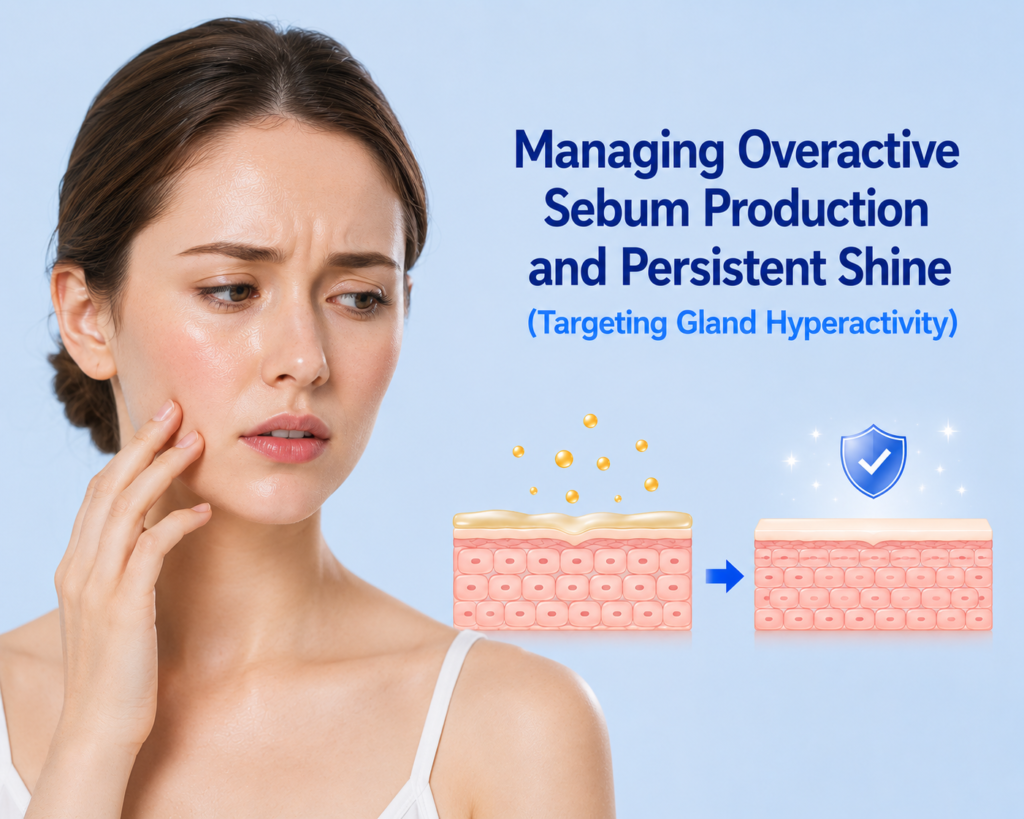
The Approach: Stripping the skin of oil only triggers it to produce more. The goal is to visibly balance the surface and regulate the appearance of shine throughout the day without using harsh, drying alcohols.
- The Xtrimoist AV Solution: We utilize The Oil-Balancing & Tone Correctors. By formulating with a high-performance duo of Niacinamide (Vitamin B3) and Zinc PCA, the gel actively regulates the appearance of excess sebum, significantly minimizing midday shine and promoting a balanced, matte-like finish.
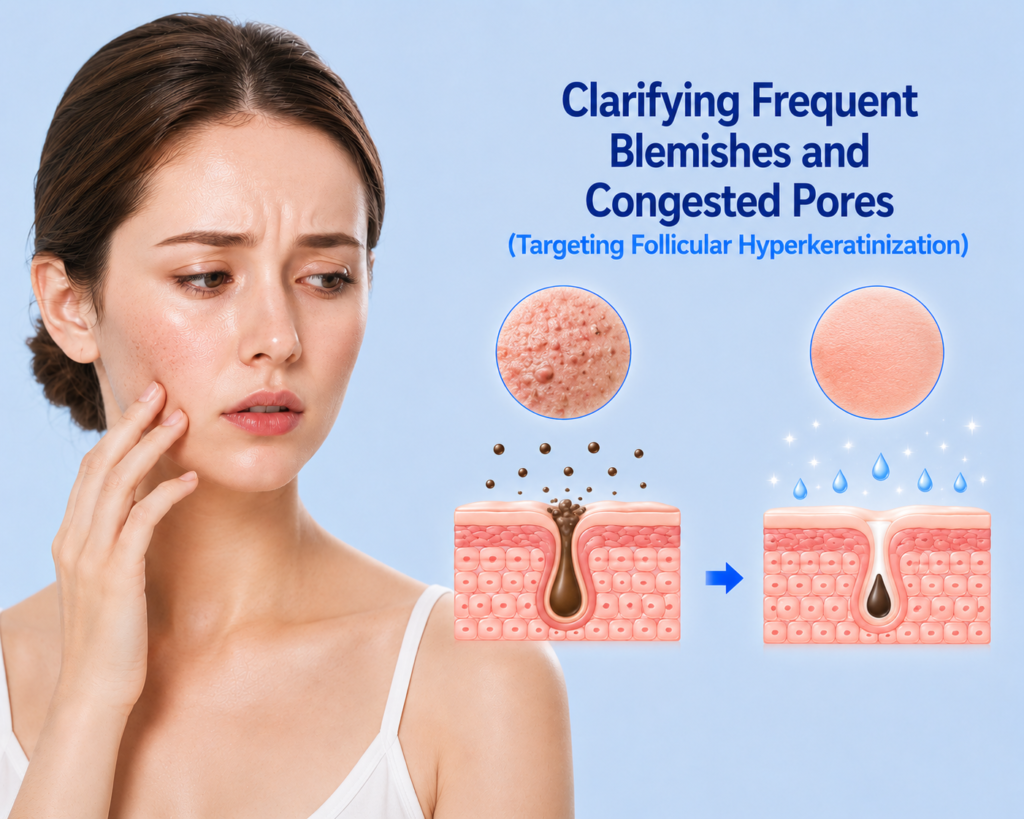
The Approach: To prevent the biological plugs that cause blackheads and blemishes, the trapped dead skin cells and debris must be gently dissolved inside the pore lining.
- The Xtrimoist AV Solution: We deploy our Clarifying & Refining Complex. Featuring the lipophilic (oil-soluble) exfoliating action of Salicylic Acid alongside natural Willow Bark Extract, this blend expertly clears away accumulated dead skin cells. This keeps the pores looking clear, refined, and highly resistant to future congestion.
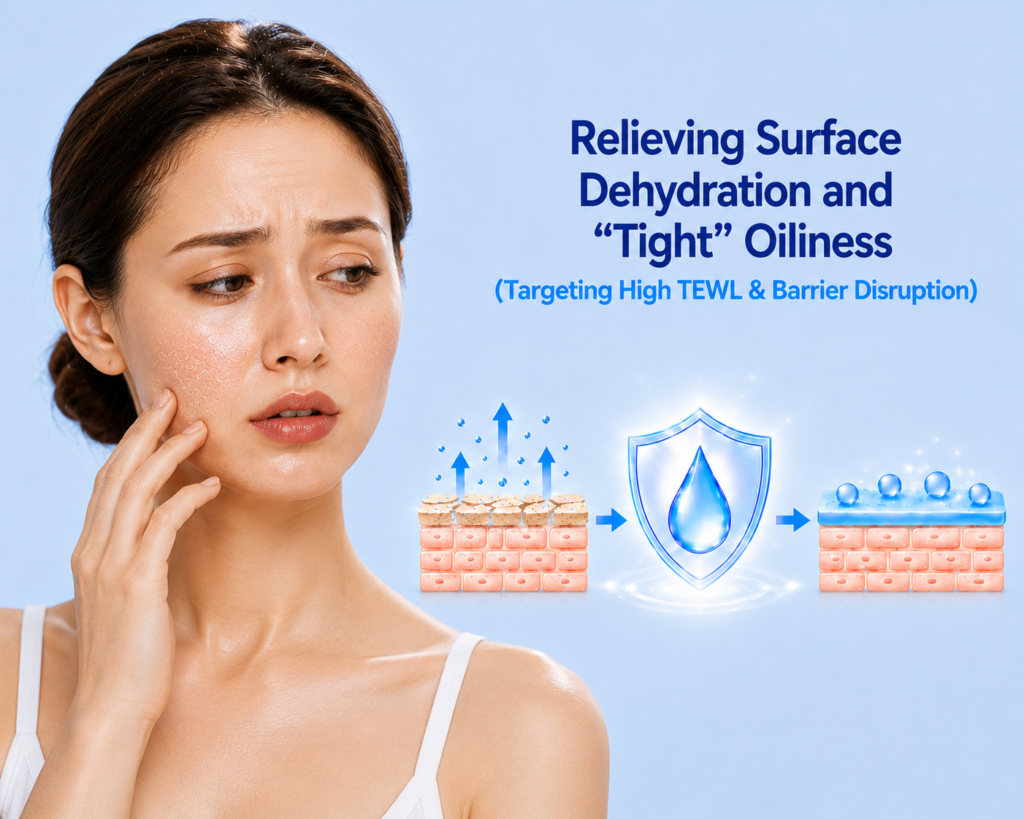
The Approach: Dehydrated, blemish-prone skin needs intense water-based moisture and barrier repair, but traditional heavy lipid creams can trigger breakouts.
- The Xtrimoist AV Solution: The gel relies on a Weightless Barrier Support Matrix (Ceramides NP, AP, EOP, and Phytosphingosine) suspended in a non-comedogenic base. Paired with Sodium Hyaluronate and Trehalose, this system draws vital water deep into the parched surface and repairs the barrier to halt Trans-Epidermal Water Loss (TEWL). This instantly relieves the “tight” feeling without adding any heavy, greasy residue.
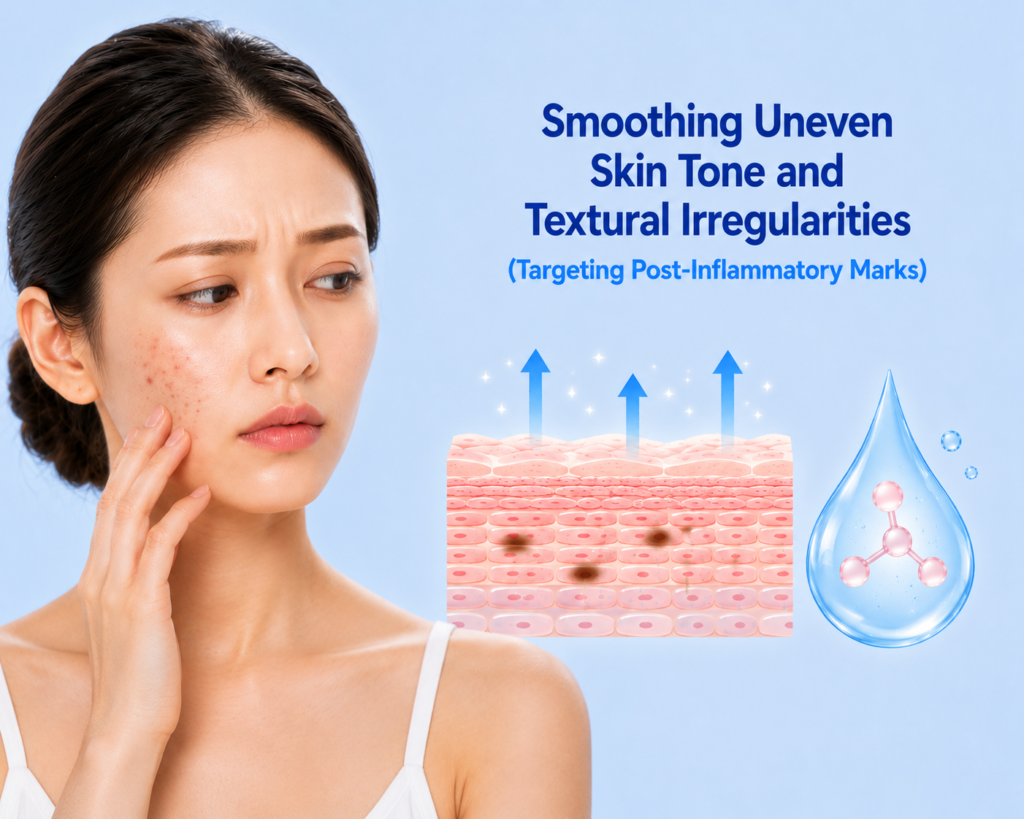
The Approach: Following a breakout, the skin requires gentle cell turnover and targeted brightening to fade the appearance of dark spots and smooth out rough patches.
- The Xtrimoist AV Solution: The continuous, gentle exfoliation provided by Salicylic Acid works synergistically with the high concentration of Niacinamide. This combination is highly effective at visibly evening out post-blemish skin tone, softening rough textural irregularities, and restoring a clearer, more uniform complexion.
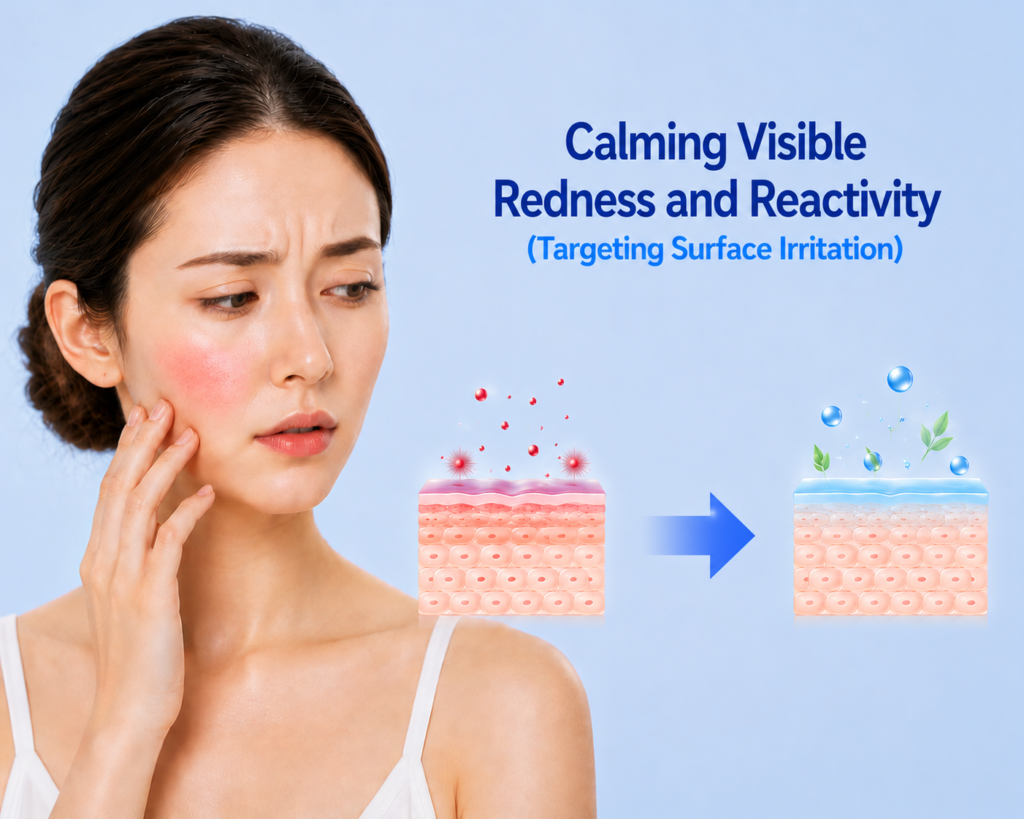
The Approach: Blemish-prone skin is inherently inflamed and reactive. It needs an immediate cooling, soothing environment to calm the visible flush associated with congested pores.
- The Xtrimoist AV Solution: Our Botanical Soothing & Hydration Blend delivers rapid comfort. By combining the proven botanical properties of Aloe Vera, Green Tea Extract, Allantoin, and D-Panthenol, the gel actively comforts skin sensitivity, cools the surface, and visibly reduces the localized redness and irritation associated with reactive skin.