

Skin Concern
For Sensitive, Dry & Itch-Prone Skin
Symptoms
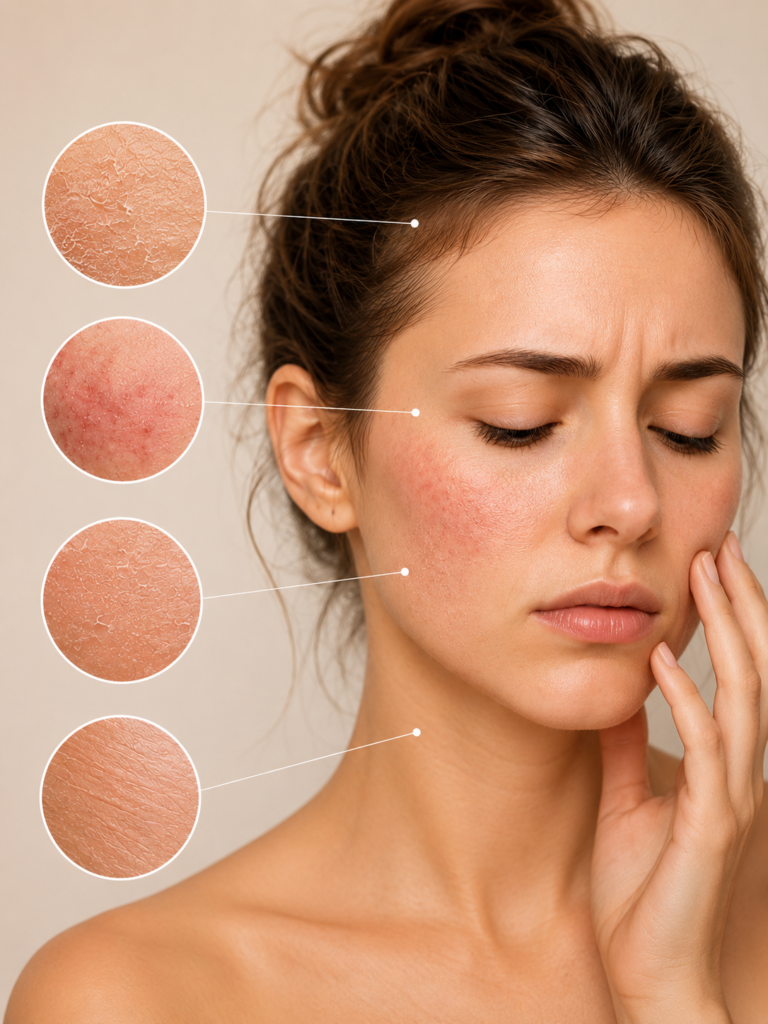
Common Characterises of Extremely Dry, Compromised Skin
- Intense, Unrelenting Dryness: Severe dryness often triggers a damaging “itch-scratch cycle,” where the urge to scratch further weakens the skin’s natural moisture barrier.
- Extreme Tightness: A compromised lipid barrier causes the skin to lose its ability to retain essential moisture. This leaves the affected areas feeling chronically rough, tight, and severely parched.
- Visible Redness: During periods of extreme dryness, the skin can appear visibly irritated. This manifests as red patches on lighter skin, or deeper brown, purple, and ashen gray patches on darker skin tones.
- Thickened Texture: A direct result of chronic, prolonged rubbing and scratching to alleviate dryness. The affected skin can begin to feel thick, hard, and develop exaggerated creases.
- Scaling and Flaking: As the skin loses vital moisture, natural cellular turnover is impacted. This causes the outer layers of the skin to visibly shed, leading to a rough, flaky appearance.
Causes
- The Cause: The primary driver of extreme dryness is a structural deficit in the skin's "brick and mortar" lipid matrix. In compromised skin, there is a pronounced depletion of intercellular lipids—specifically the critical ratio of ceramides (such as NP, NS, AS, AP, EOP), cholesterol, and free fatty acids. This lipid depletion, often compounded by genetic factors like loss-of-function mutations in the filaggrin (FLG) gene, causes Trans-Epidermal Water Loss (TEWL) to spike.
- The Itch Mechanism: As water evaporates from the skin, epidermal nerve fibres become hypersensitized. Keratinocytes in the dry skin release neurotrophic factors and cytokines (like TSLP) that bind to sensory neurons, transmitting an itch signal to the brain. Scratching physically damages the epithelial cells, triggering further inflammation and perpetuating the vicious "itch-scratch cycle."
- The Cause: Skin flexibility and pliability are heavily dependent on its hydration status, which is maintained by the Natural Moisturizing Factor (NMF). The NMF is a complex of humectants (including amino acids, urea, and pyrrolidone carboxylic acid) that reside inside the corneocytes (the "bricks"). When the protective lipid barrier is breached, the water bound by the NMF rapidly evaporates. Dehydrated corneocytes shrink, causing the skin to lose its mechanical elasticity, resulting in a sensation of chronic, painful tightness.
- The Cause: A compromised barrier does not just let water out; it lets environmental aggressors in. The micro-tears and lipid gaps allow irritants, allergens, and microbes (such as Staphylococcus aureus) to penetrate the epidermis. The immune system detects these foreign invaders and mounts a localized defense, triggering a cascade of pro-inflammatory cytokines (such as IL-4, IL-13, and IL-31). This immune response causes localized vasodilation (the widening of blood capillaries), which presents visually as redness or dark, ashen patches depending on the skin tone.
- The Cause: Lichenification is a direct biological defense mechanism against the mechanical trauma of chronic scratching. In response to relentless physical rubbing, the skin triggers hyperproliferation of keratinocytes (rapid over-production of skin cells) in an attempt to protect the underlying vulnerable tissue. This accelerated, disordered cell growth creates a thickened, leathery, and hardened epidermal layer with exaggerated, bark-like creases.
Reference: Management of Itch in Atopic Dermatitis (Yosipovitch et al., 2013).
- The Cause: In healthy skin, dead cells shed imperceptibly because specific enzymes (proteases) dissolve the protein bridges (corneo desmosomes) holding them together. Crucially, these enzymes are water-dependent. When severe TEWL occurs and the stratum corneum is dehydrated, these enzymes cannot function properly. As a result, the dead cells remain attached to one another, clumping together and eventually peeling off in large, visible, rough flakes rather than microscopic fragments.
Treatment
The Xtrimoist AD Management Strategy: A Multi-Pathway Approach
Managing intensely dry, reactive, and compromised skin requires a formulation that addresses both the immediate discomfort and the underlying barrier disruption. Here is how the Xtrimoist AD formula targets the core characteristics of moisture loss:
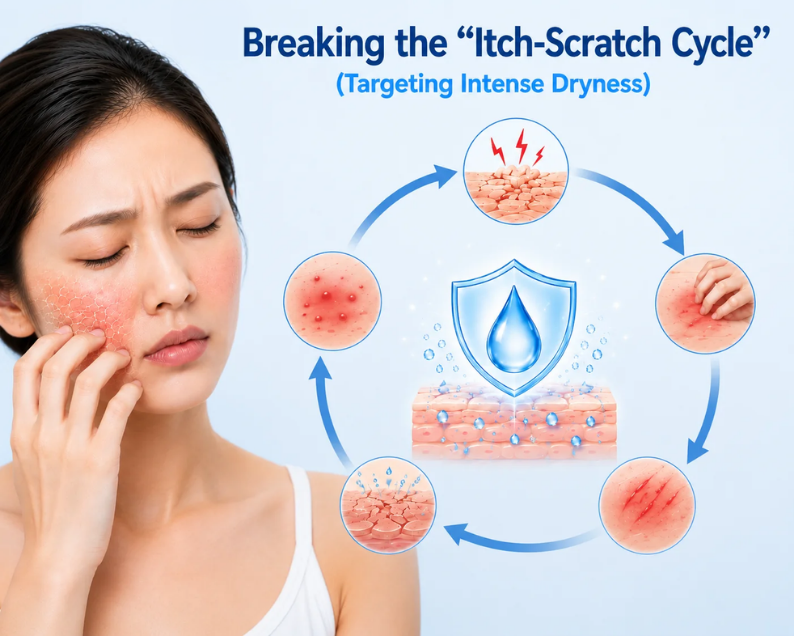
The Approach: To stop the mechanical damage caused by continuous scratching, the skin requires immediate soothing.
- The Xtrimoist AD Solution: We deploy our Targeted Soothing Care complex. By combining the time-tested, calming properties of Colloidal Oatmeal with HPPBA (an advanced active inspired by oats), the lotion delivers rapid comfort, soothing the urge to scratch and immediately alleviating the feeling of severe dryness.
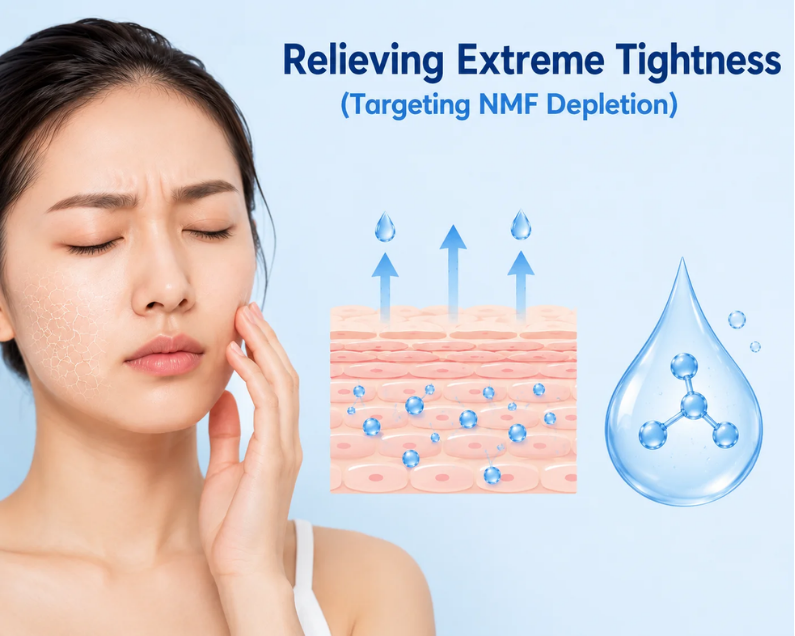
The Approach: When the skin’s Natural Moisturizing Factor (NMF) is depleted, the cells dehydrate and lose flexibility. The solution is to draw moisture back into the skin and optimize fluid reserves.
- The Xtrimoist AD Solution: Our Hydration Complex of 7 Intensive Moisturisers does exactly this. Utilizing Hydroxyethyl Urea, Sodium Hyaluronate, and a specialized 17 Amino Acid Complex, the formula actively supports the NMF. Meanwhile, the advanced sugar complex and Shea Butter lock this deep hydration in, instantly relieving the sensation of chronic tightness and restoring a supple feel.
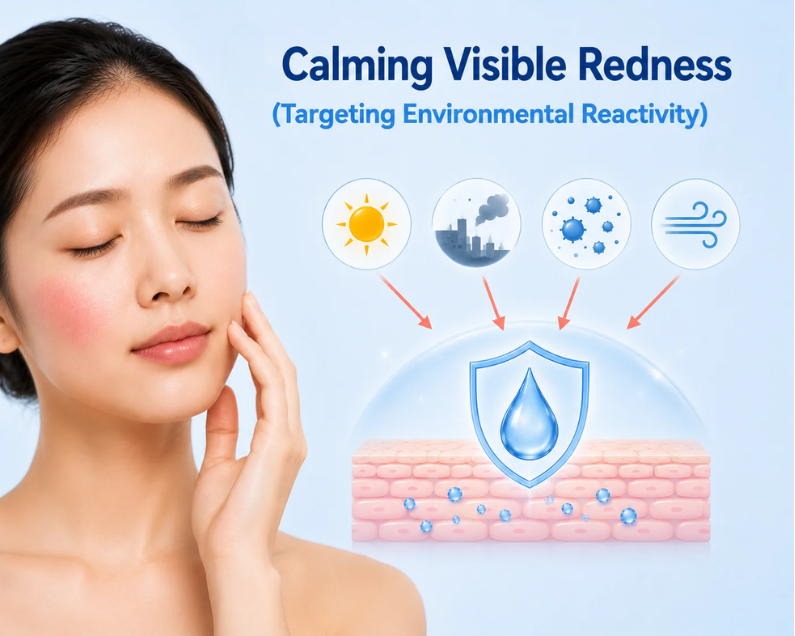
The Approach: A compromised barrier lets irritants in, causing the skin to react with visible redness and blotchiness. This requires powerful, non-irritating antioxidants to calm the surface.
- The Xtrimoist AD Solution: The formula is enhanced with advanced Botanical Calming Agents. Highly potent, colorless Tetrahydrocurcumin (derived from turmeric) and Glycyrrhiza Inflata Root Extract (Licorice) work synergistically to actively soothe surface sensitivity and visibly reduce the appearance of redness caused by extreme dryness.
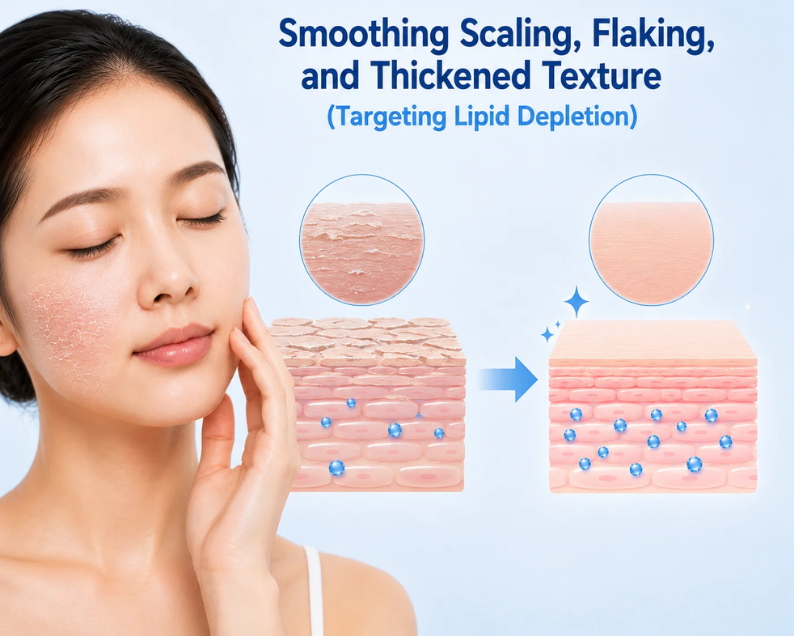
The Approach: When the lipid barrier is broken, water escapes (TEWL), causing dead skin cells to clump together into flakes and thick patches. The only way to normalize the skin’s natural shedding process is to physically rebuild that barrier and stop the water loss.
- The Xtrimoist AD Solution: We utilize the Barrier Support Matrix. By bio-mimetically replenishing the skin with 5 Essential Ceramides (NP, NS, AS, AP, EOP) and Cholesterol, this lipid complex directly repairs the “mortar” of the skin. Halting TEWL allows the skin’s natural enzymes to function properly again, which gradually reduces visible flaking and softens thickened, rough textures over time.