

Skin Concern
Dry, Scaly & Itch-Prone Skin
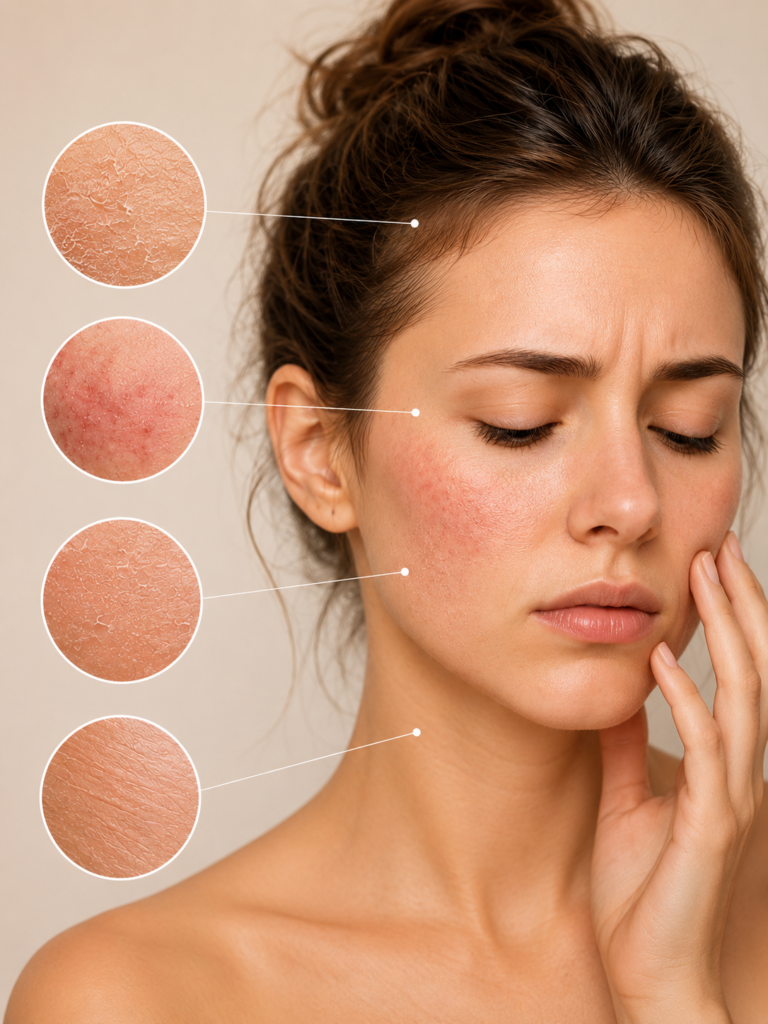
Symptoms
Common Characteristics of Extremely Dry, Scaly & Texture-Prone Skin
- Severe Scaling and Flaking: When the skin’s natural exfoliation process is disrupted, dead cells accumulate on the surface. This buildup creates visible, stubborn flakes and an uneven, ashen appearance.
- Thickened, Rough Patches: Prolonged moisture loss and cellular buildup can cause localized areas of the skin to feel abnormally thick, hard, and coarse to the touch.
- Persistent Dryness-Induced Itching: Extreme moisture loss often triggers a feeling of deep discomfort, leading to a damaging “itch-scratch cycle” that further weakens the skin’s protective barrier.
- Visible Redness: A compromised lipid barrier leaves the skin highly vulnerable to environmental stressors. This irritation frequently manifests as visible redness or blotchiness across the affected areas.
- Chronic Tightness and Parched Texture: As the skin loses its ability to retain essential water (Trans-Epidermal Water Loss), it loses its natural flexibility. This leaves the skin feeling severely tight, stretched, and uncomfortable.
Causes
- The Cause (Autonomic Neuropathy and Sebostasis): In diabetes-prone skin, metabolic fluctuations can lead to mild autonomic neuropathy (damage to the nerves that control involuntary functions). This nerve dysfunction directly impairs the sweat glands (anhidrosis) and sebaceous glands (sebostasis). Without adequate sweat and sebum production, the skin's protective hydrolipidic film is severely diminished. This extreme surface dryness sensitizes cutaneous nerve endings, triggering a persistent, chronic itch that initiates the damaging itch-scratch cycle.
- The Cause (Glycation and Microangiopathy): Chronic tightness in this skin profile is largely driven by the formation of Advanced Glycation End-products (AGEs). When excess glucose binds to structural proteins like collagen and elastin, it creates rigid cross-links. This glycation causes the skin to lose its natural elasticity and pliability, feeling chronically tight and stiff. Additionally, impaired microcirculation (microangiopathy) means the dermal blood vessels cannot efficiently deliver water and essential nutrients to the epidermis, leading to severe cellular dehydration.
- The Cause (Structural Protein Alteration): The thickening of the skin is a physical manifestation of both glycation and the skin's defensive response to extreme dryness. As AGEs accumulate, the extracellular matrix becomes abnormally dense and stiff. Furthermore, because the skin lacks flexibility and moisture, areas subject to mechanical friction or pressure rapidly develop hyperkeratosis (thickening of the stratum corneum) as a protective mechanism, resulting in a coarse, hard texture.
- The Cause (Enzymatic Desquamation Failure): Similar to other extreme dry skin conditions, scaling in this profile is caused by the failure of the skin's natural shedding process. The enzymes responsible for breaking down the bonds between dead skin cells (corneodesmosomes) are strictly water-dependent. Due to the severe lack of moisture (driven by reduced sweating and microvascular impairment), these enzymes cannot function. Dead cells accumulate, clump together, and shed in visible, ashen flakes.
- The Cause (Capillary Fragility and Barrier Breach): The visible redness in compromised, diabetes-prone skin is twofold. First, microangiopathy causes the tiny blood vessels in the skin to become fragile, dilated, and dysfunctional, which can visibly present as redness or erythema. Second, because the lipid barrier is severely depleted, external irritants and opportunistic microbes easily penetrate the skin. This triggers a localized, subclinical inflammatory response from the immune system, further contributing to blotchiness and visible irritation.
Treatment
The Xtrimoist PS Management Strategy:
A Multi-Pathway Approach
Managing scaly, texture-prone, and intensely dry skin requires a delicate balance of gentle exfoliation, deep barrier repair, and soothing hydration. Here is how the Xtrimoist PS formula specifically targets the core characteristics of this skin profile:

The Approach: When the skin’s natural shedding cycle accelerates, dead cells clump together on the surface. To resolve this, the “glue” holding these dead cells must be gently dissolved without harsh mechanical scrubbing.
- The Xtrimoist PS Solution: We deploy our Multi-Action Exfoliating & Smoothing Complex. By combining the targeted keratolytic action of Salicylic Acid and Urea with Lactic Acid (AHA) and Gluconolactone (PHA), this powerful blend gently exfoliates rough patches, encourages the natural shedding of dead cells, and visibly reduces the appearance of stubborn scaling.
The Approach: Prolonged cellular accumulation causes the skin to feel abnormally hard and thick. It requires deep softening and texture refinement.
- The Xtrimoist PS Solution: High-purity Urea deeply penetrates to soften the hardened plaques. This is supported by our Essential Skin-Conditioning Trio (Niacinamide, D-Panthenol, and Vitamin E Acetate), which works synergistically to significantly improve overall skin texture and tone, leaving coarse areas feeling refined and smooth.
- The Approach: Extreme moisture loss and localized irritation trigger a feeling of deep discomfort and the urge to scratch, which further damages the skin.
- The Xtrimoist PS Solution: The formula utilizes an Advanced Hydration & Soothing Network. Enhanced with the proven calming properties of Colloidal Oatmeal, Aloe Vera, and Bisabolol, the lotion rapidly soothes the discomfort and the urge to scratch associated with extreme dryness, helping to break the damaging itch-scratch cycle.
- The Approach: A compromised barrier leaves the skin vulnerable to external stressors, resulting in visible redness. The skin needs powerful antioxidant support and a non-irritating environment to calm down.
- The Xtrimoist PS Solution: Formulated at a skin-respecting pH of 5.5 and free from fragrances, parabens, and dyes, the lotion ensures a non-disruptive environment. Simultaneously, Niacinamide (Vitamin B3) and Vitamin E provide advanced antioxidant support to calm sensitivity and visibly reduce the appearance of redness and blotchiness.
- The Approach: A faulty lipid barrier allows continuous moisture escape (Trans-Epidermal Water Loss), leaving the skin brittle, tight, and stretched. The structural “mortar” must be replenished.
- The Xtrimoist PS Solution: We utilize the bio-mimetic Barrier Support Matrix. By delivering five essential ceramides (NP, NS, AS, AP, EOP) fortified with Cholesterol and Hydrogenated Lecithin, this complex directly repairs the skin’s lipid barrier. This stops TEWL in its tracks, while ingredients like Sodium Hyaluronate, Shea Butter, and Glycerin draw in multi-level moisture, restoring the skin’s natural flexibility and eliminating the feeling of chronic tightness.